Pallets coming in, pallets going out, forklifts waiting for space, and aisles that feel tighter every month – if your warehouse never really slows down, you’ll know this feeling well.
High turnover warehouses don’t struggle because people aren’t working hard. They struggle because traditional racking layouts weren’t designed for constant motion.
That’s where shuttle racking earns its place. We’ll share practical, experience-led tips on using shuttle racking to keep fast-moving operations flowing – even when demand won’t let up.
What “High Turnover” Really Means in Warehousing
High turnover isn’t about how many pallets you store – it’s about how often you touch them.
In real terms, it means the same pallet lanes being loaded and unloaded multiple times per shift. Every extra metre of forklift travel adds friction. Every pause compounds any delays.
This pressure shows itself in:
- Layouts become congested
- Safety risks increasing
- Labour costs creeping up quietly
This is everyday reality in sectors like FMCG, food and beverage, and cold storage, where speed matters more than static capacity.
When throughput becomes the real constraint, that’s where shuttle systems start to make sense.
Why Shuttle Racking Excels in Fast-Moving Operations
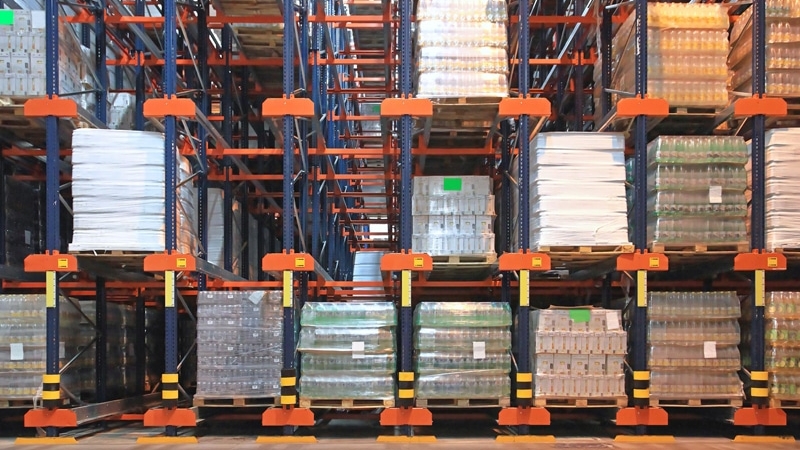
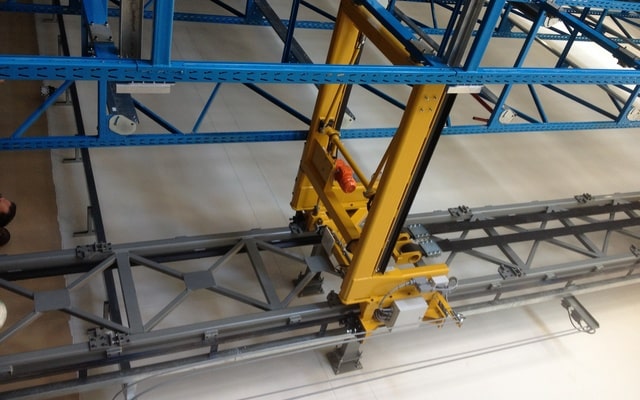
So, how does shuttle racking work? Instead of forklifts driving deep into lanes, a motorised shuttle handles pallet movement inside the racking. Forklifts stay at the front so routes stay short, and handling becomes predictable.
What this changes on the warehouse floor:
- Less forklift travel per movement
- Fewer stop-start delays during peak shifts
- Consistent retrieval speeds, even under pressure
Shuttle systems can be semi-automated or fully integrated with your WMS. Both reduce any wasted movement.
At Stamina Storage, we’ve seen well-designed shuttle systems increase throughput by up to 40% in the right high turnover environments – not by rushing people, but by removing inefficiency.
Designing a Shuttle Racking Layout for Throughput
This is where many systems fall down. Not because of the shuttle itself, but because of the layout around it being inefficient.
Key design decisions that directly affect throughput:
- Lane depth matched to real SKU volumes, not best-case assumptions
- FIFO or LIFO flow designed around how stock actually moves
- Shuttle speed and battery capacity suited to operating hours and environment
- Staging and transfer zones sized properly to prevent lane-front congestion
If pallets are stacking up at the lane front, you haven’t improved throughput – you’ve just moved the bottleneck. Good design removes friction before automation ever comes into play.
Best Practices for Managing High Turnover Systems
High turnover shuttle systems work best when they’re treated as part of the operation – not a bolt-on.
Start With The Basics
Keep shuttle batteries charged and rotate units so downtime doesn’t land at peak periods.
Control Traffic, Don’t React To It
Schedule replenishment windows to avoid inbound and outbound movements clashing in the same aisles.
Train For The Moments That Matter
Operators should know shuttle recovery procedures. It’s rarely needed – but when it is, it matters.
Use Data, Not Guesswork
WMS visibility helps monitor lane occupancy and spot pressure points early.
Plan For Peaks, Not Averages
Seasonal surges need buffer lanes or overflow capacity designed in from day one.
Protect The System
Regular rack inspections maintain alignment, safety, and long-term ROI – not to mention assuring ongoing compliance.
Measuring ROI: Throughput, Labour, and Space Utilisation
Look at the right metrics:
- Pallets moved per hour, per operator
- Reduction in forklift travel distance
- Fewer damaged pallets in tight lanes
- Improved cube utilisation across the warehouse
Operators using shuttle systems often report 25–40% faster pallet turnaround per shift, simply because wasted handling is removed.
That’s space ROI, labour ROI, and throughput ROI working together.
How to Avoid Common Pitfalls
Shuttle racking isn’t the answer to every problem.
Over-automating low-SKU or unpredictable operations can reduce flexibility. Poor battery management causes delays. And layouts that don’t match real workflows can shift congestion rather than remove it.
That’s why expert planning is crucial.
At Stamina Storage, we prevent these issues through:
- Honest suitability assessments
- Throughput modelling based on real data
- Operator training and handover
- Ongoing maintenance and support
Why Work with Stamina Storage Systems?
We’re a UK-based, engineering-led racking specialist with deep experience in high-volume environments.
Our SEMA and SIERS accredited teams design shuttle systems around how your warehouse actually runs – not how a brochure says it should.
From tailored layouts to WMS-ready integration, our focus is simple: Systems that perform when demand is at its highest.

Speak to a Shuttle Racking Expert Today
If your warehouse is running flat-out and space is tightening, it may be time to rethink how pallets move.
Our design team can model what shuttle racking would mean for your throughput, labour, and space – using your real layout and data.