Shuttle racking is a form of automated pallet racking designed to boost storage density, reduce forklift travel, and increase throughput.
In this article, we’ll explain how these systems function, and show how our team at Stamina Storage Systems delivers it in practice – whilst also offering actionable advice on integration, layout design, and how to avoid common pitfalls.
What Is Shuttle Racking?
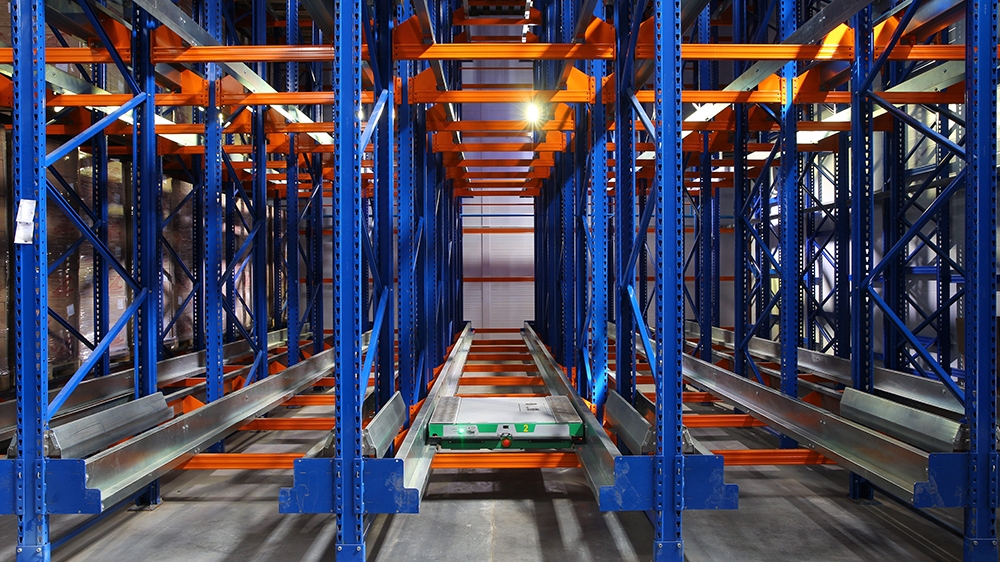
Shuttle racking (also called radio shuttle) is a high-density storage system where a motorised shuttle carries pallets into deep storage lanes – replacing the need for forklifts to enter the rack.
Key points:
- The forklift delivers the pallet to the front of the lane, and then the shuttle moves it into its deeper position.
- The shuttle is battery-powered and runs on rails within the racking structure.
- The system can be semi-automated (remote-controlled) or fully automated (WMS integrated).
- Ideal for operations storing many pallets per SKU or with repetitive, high-throughput movements.
In short: it maximises space, improves efficiency, and reduces forklift travel.
How Does Shuttle Racking Work?
1. System Components
- Rack structure: Uprights and beams form deep storage lanes.
- Rails: Guide and support the shuttle vehicle within each lane.
- Shuttle: Motorised carrier that transports pallets.
- Control system: Remote, tablet or WMS interface to direct movement.
- Entry points: Forklifts place and retrieve pallets from the front of each lane.
2. Loading Process
- A forklift places a pallet at the front of a lane.
- The shuttle picks up the pallet and transports it to the next free location.
- It deposits the pallet, returns to the front, and waits for the next command.
3. Unloading Process
- When retrieval is needed, the shuttle collects the pallet and returns it to the lane front for the forklift to collect.
- Systems can operate FIFO (first-in, first-out) or LIFO (last-in, first-out) depending on layout.
4. Automation & Integration
Advanced systems link directly with warehouse management software (WMS) to manage inventory locations.
Types of Shuttle Racking Systems
| Type | Description | Ideal Use |
| Semi-Automated Shuttle | Shuttle moves forwards/backwards in one lane. Forklift handles entry/exit. | High volumes, few SKUs. |
| Fully Automated / 4-Way Shuttle | Shuttle moves in multiple directions with lift integration. | Large-scale automated warehouses. |
| Mother-Child (AS/RS) System | “Mother” vehicle transports smaller “child” shuttles across levels. | Mega-distribution and cold-store facilities. |
Benefits of Shuttle Racking
-
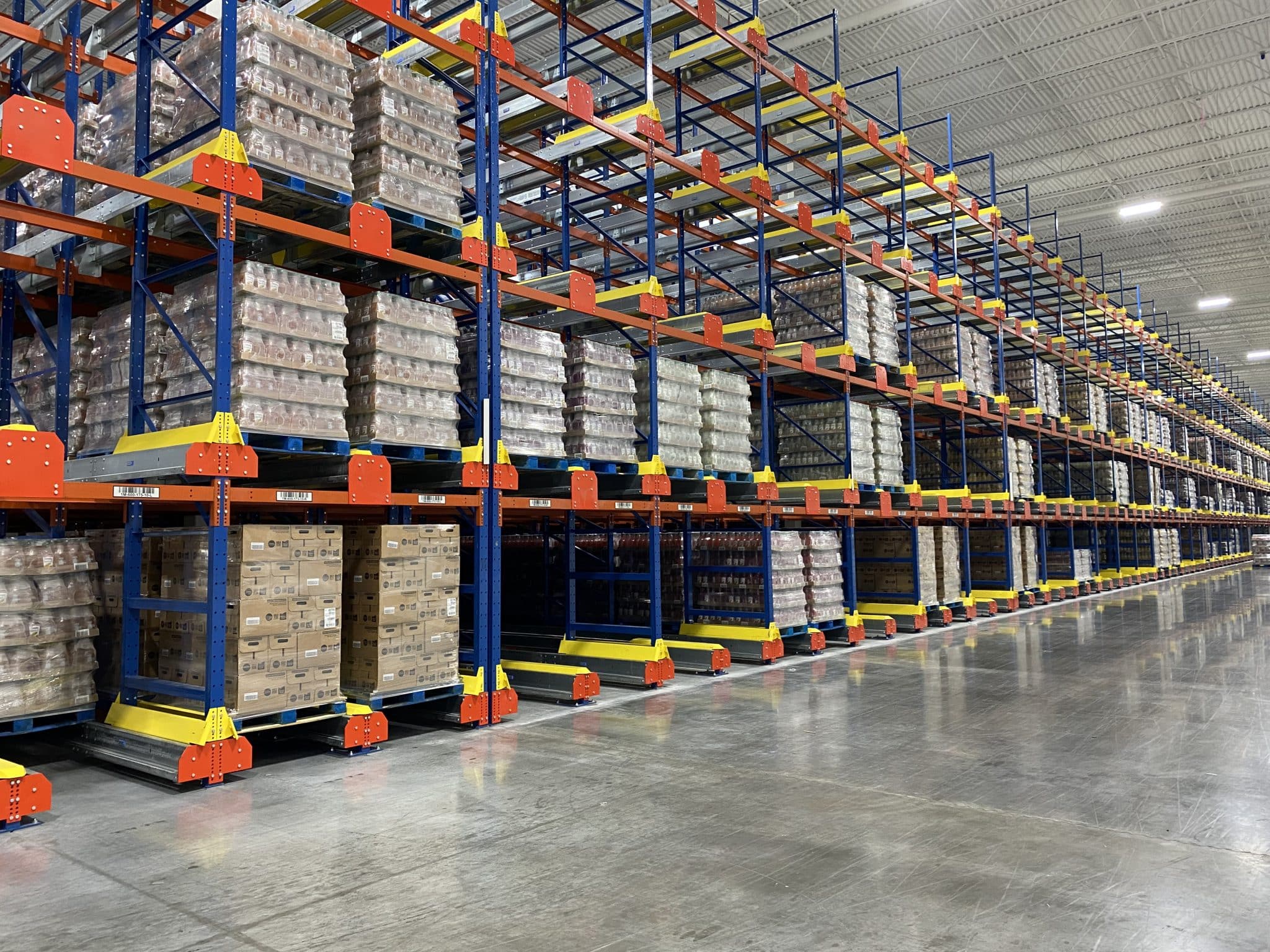
Maximise Storage Density
-
Faster Throughput
-
Improved Safety
-
Suitable for Specialist Applications
Is Shuttle Racking Right for You?
Before investing, consider these key factors:
Warehouse Profile
- Many pallets per SKU is ideal.
- Mixed SKUs with low volumes each are better suited to push-back racking.
Operational Environment
- High-throughput or seasonal storage.
- Temperature-controlled warehouses.
Budget & Automation Goals
- Semi-automated systems are a lower-cost entry point.
- Full integration with WMS or AS/RS automation offers long-term ROI.
Common Mistakes to Avoid
Skipping WMS integration
Can cause data mismatches and inefficiency.
Incorrect SKU profiling
Shuttle systems work best with high-volume SKUs.
Underestimating maintenance
Shuttle racking needs proactive battery and rail checks.
Poor floor tolerances
Accurate levelling ensures good shuttle performance.
No expansion planning
Ensure you design your layout for future scalability.
Our engineering team includes all these considerations during initial site surveys and system design.