You’ve probably heard the hype about shuttle racking – faster pallet movements, fewer forklifts, and all that talk about “automation.” But when you’re staring down another large investment, it’s natural to ask yourself: “does it really pay off?” Let Stamina cut through the buzzwords and run the numbers like people who actually manage warehouses do.
The Basics Of Shuttle Racking
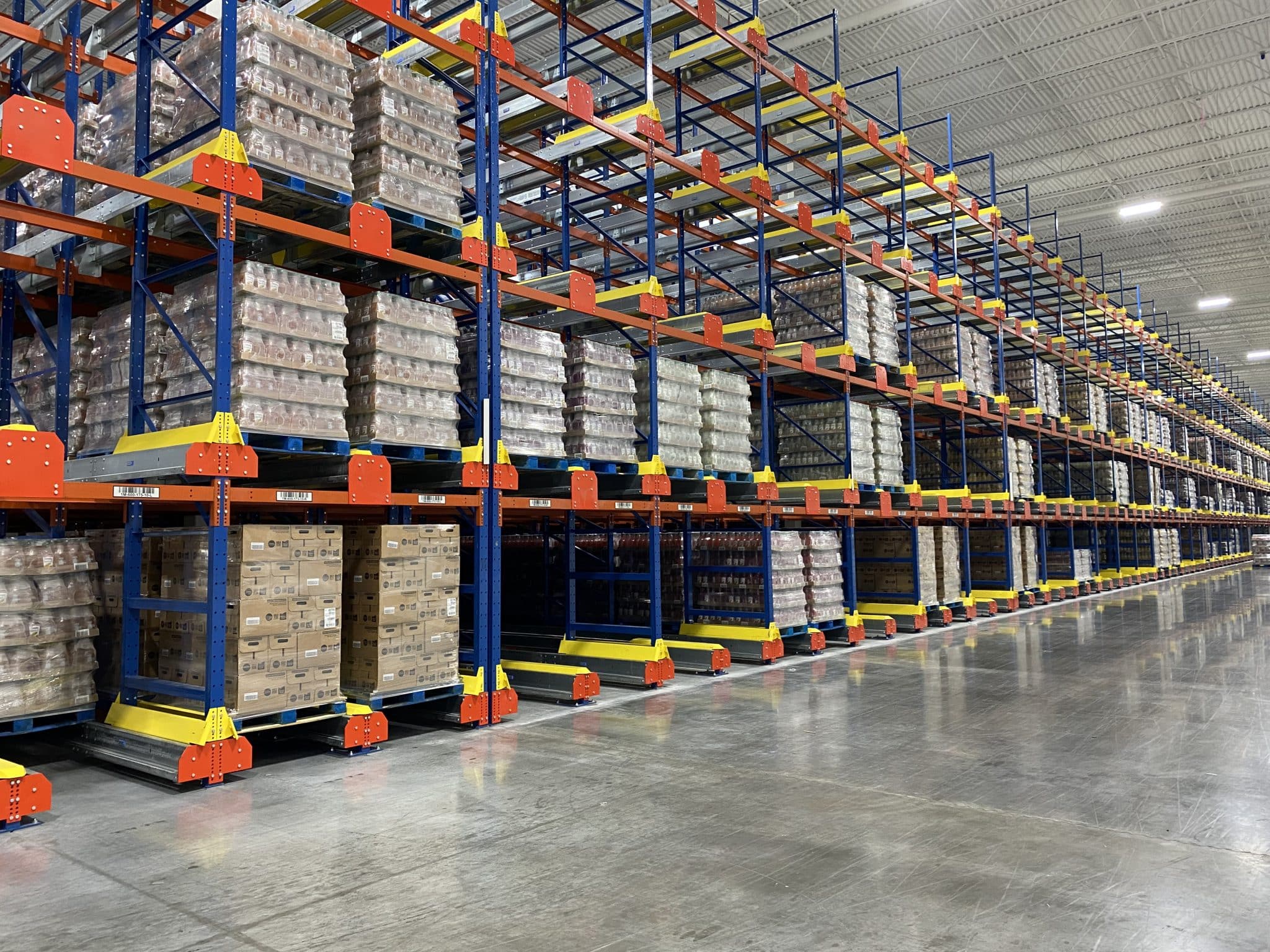
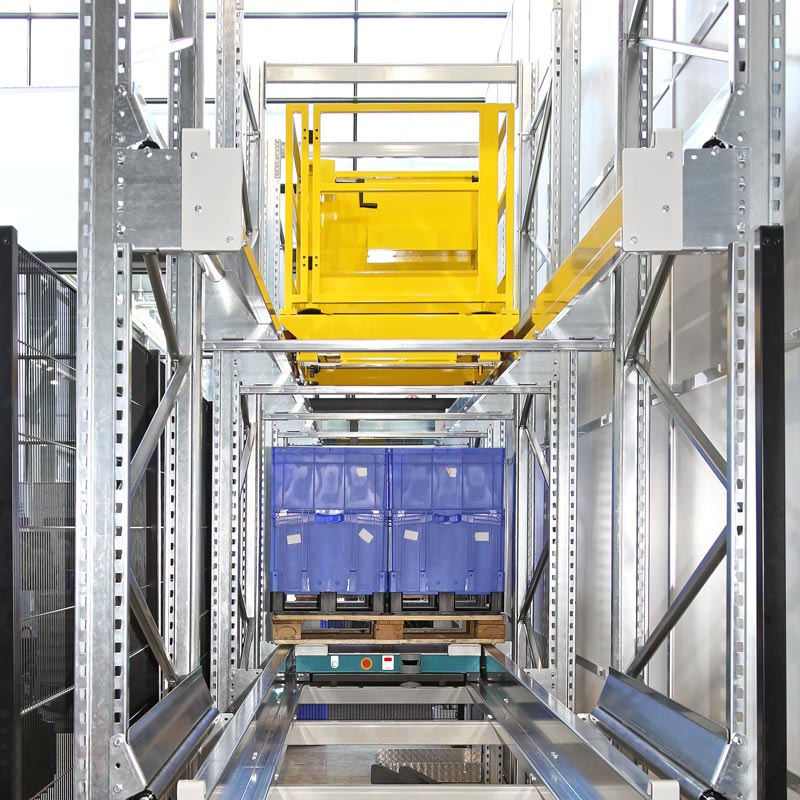
Shuttle racking is basically a smart storage system where a motorised shuttle moves pallets deep into the racking lanes. Instead of a forklift driver threading their way into every aisle, the shuttle does the heavy lifting, saving time and freeing up space.
It’s a halfway point between fully automated systems and traditional drive-in racking – the sweet spot for companies that want efficiency without building a fully robotic warehouse.
You’ll often hear it called radio shuttle, pallet shuttle, or semi-automated storage. Whatever the label, the principle’s the same: denser storage, faster access, and fewer moving parts on the warehouse floor.
Where the Real Savings Start Showing
Let’s get practical. Shuttle systems tend to cost more upfront than standard adjustable pallet racking – no surprises there. But they flip the ROI equation by cutting ongoing operational costs.
Higher density = less space needed
A shuttle system can bump up storage density by 30–50%. If you’re paying rent by the square metre, that density translates directly to savings.
Fewer forklift movements = lower labour and energy bills
Every shuttle run replaces multiple forklift trips. Less traffic means fewer operators, reduced maintenance, and smaller fuel or battery bills.
Faster throughput = higher revenue potential
When pallets move quicker, you can process more orders in the same shift. Now, if your operation runs 24/7, or deals with repetitive SKU movements, the payback can be surprisingly quick – often two to four years, depending on scale and utilisation.
The Cost Conversation
Yes, shuttle racking systems can sting at the start. You’re looking at a setup that combines precision steelwork, electronics, and software – so it’s not as cheap as metal and bolts. But it’s also far from a sunk cost.
Think of it this way: a forklift fleet depreciates, needs servicing, and loses value every year. A shuttle system, on the other hand, keeps earning back its cost through productivity gains. It’s like comparing a short-term hire car to a fuel-efficient truck you’ll run for a decade.
And while the initial investment might seem big on paper, the long term data usually falls in favour of shuttle racking. Lower insurance premiums (fewer forklift incidents), better stock rotation control, and fewer damaged pallets all add up quietly in the background.
When Shuttle Racking Doesn’t Make Sense
Not every warehouse is ready for automation. If your stock rotation is random or your product mix changes weekly, shuttle racking might not justify itself yet. It shines in environments where:
- SKUs are relatively stable and repetitive
- Pallet turnover is high
- FIFO or LIFO systems are consistent
- Space constraints make traditional racking inefficient
If you’re running a low-volume or high-variation setup, you might find that drive-in or push-back racking gives better short-term flexibility.
ROI in Real Life
Let’s imagine a 5,000-pallet warehouse. Converting to shuttle racking could increase capacity by around 40%. That means fitting 7,000 pallets into the same footprint (or shrinking your building size for the same output).
Over five years, that might mean:
- £50,000 – £100,000 saved in space costs
- £25,000 – £40,000 in reduced forklift maintenance and fuel
- £20,000+ in labour efficiency gains
Suddenly, that upfront spend doesn’t look quite so painful. Even conservative projections put ROI around the three-year mark – and could be even faster if you’re expanding or leasing new space.
Intangibles You Can’t Always Measure
ROI isn’t just about money on paper. There’s something to be said for the intangible wins: safer aisles, quieter operations etc. Forklift congestion is one of the biggest sources of near-miss reports in warehousing, and shuttle systems quietly erase half those risks.
You’ll also find morale improves when staff aren’t battling congestion or hunting for free aisles. Fewer errors, fewer frustrations. This is the stuff that doesn’t show up on a balance sheet, but you feel it in the general atmosphere.
Maintenance, Reliability, and the “What If It Breaks?” Question
Good question. Shuttle systems are more sophisticated than traditional racking, so there is some added maintenance. Mainly battery swaps, firmware updates, and periodic inspections.
But unlike a fully automated ASRS system, a shuttle setup still lets you use forklifts if something goes wrong. It’s automation with a safety net. That hybrid nature is exactly why so many medium-sized businesses opt for it because it’s not all or nothing.
What About Resale or Expansion?
Shuttle racking is modular. You can start small and add lanes or extra shuttles as your operation scales. And because it’s steel and electronics (not concrete and rails), it retains resale value far better than traditional static systems.
If you ever move sites, most of the system moves with you. That’s an underappreciated benefit, especially for businesses on shorter leases or growing fast.
Is Shuttle Racking Worth It For You?
If you’ve got the throughput, the stock profile, and the forward planning – absolutely. You reclaim space, trim costs, and future-proof your warehouse without leaning fully into automation.
For operations where every minute of handling counts, shuttle racking stops being an expense and becomes a real asset.
Still unsure? Our design team at Stamina Storage Systems runs ROI models based on your actual numbers – not generic calculators. If you’d like to see what shuttle racking could save your operation over five years, we’ll crunch the data and show you.